Tag

cybersecurity

Alea selects Continent 8 to boost cybersecurity resilience for its iGaming aggregator platform

By Featured

BLOG

Alea Partnership

Alea selects Continent 8 to boost cybersecurity resilience for its iGaming aggregator platform

Global iGaming aggregator utilizes Continent 8’s VAPT cybersecurity services to securely connect B2C operators to over 150 game providers and more than 15,000 games

Continent 8 Technologies, a leading provider of global managed hosting, connectivity, cloud and cybersecurity solutions to the iGaming and online sports betting industry, today announces that Alea, an award-winning iGaming aggregation platform, has appointed Continent 8 as its Vulnerability Assessment and Penetration Testing (VAPT) cybersecurity services provider.

Alea is among the fastest-growing game aggregators in the industry. Through one single API integration, Alea provides clients with access to over 15,000 games from over 150 providers, reducing their technical complexity and improving operational efficiency. The security and reliability of the game APIs and these integrations are crucial to Alea’s operational integrity. To manage the emerging cybersecurity challenges with a rapidly expanding network, Alea has partnered with Continent 8 to assess and evaluate their cybersecurity framework through a VAPT.

Partnering with Continent 8 and its specialized cybersecurity company, C8 Secure, Alea her undertaken a VAPT test. This comprehensive assessment enabled Alea to identify potential internal and external IT vulnerabilities, allowing them to prioritize and implement security enhancements to mitigate risk exposure, giving their customers confidence that they are accessing a secure and reliable platform.

Eduard Fumás, CTO at Alea, said, “At Alea, security is at the core of everything we do. Our commitment to creating a secure, robust and scalable API solution sets a new standard in the iGaming industry, where data protection and system integrity are critical. Partnering with Continent 8 has been an important step for us in proactively safeguarding our platform and reinforcing the trust our partners place in us. This collaboration ensures that we continue to deliver a reliable, secure API experience to our clients. We’re proud to work with a partner that shares our dedication to cybersecurity excellence.”

Patrick Gardner, Managing Partner at C8 Secure, said, “Alea’s three principles of security, scalability and robustness resonate with Continent 8. Given the number of APIs Alea is using, their proactive approach to assessing their business and guaranteeing security for its partners is imperative.

“It’s great to be supporting Alea; we encourage all businesses in this industry to take the cybersecurity threat seriously.”

C8 Secure cybersecurity solutions

C8 Secure provides comprehensive, multi-layered threat prevention, detection and response strategies and solutions to secure your organization’s digital assets in the face of evolving cyber threats. For more information on how C8 Secure can support your cybersecurity initiatives, email info@c8secure.com or fill out our Contact Us page.

DOWNLOAD BROCHURE

For more information, please download our solutions brochure

Related content: C8 Secure in the Philippines 

TESTIMONIAL

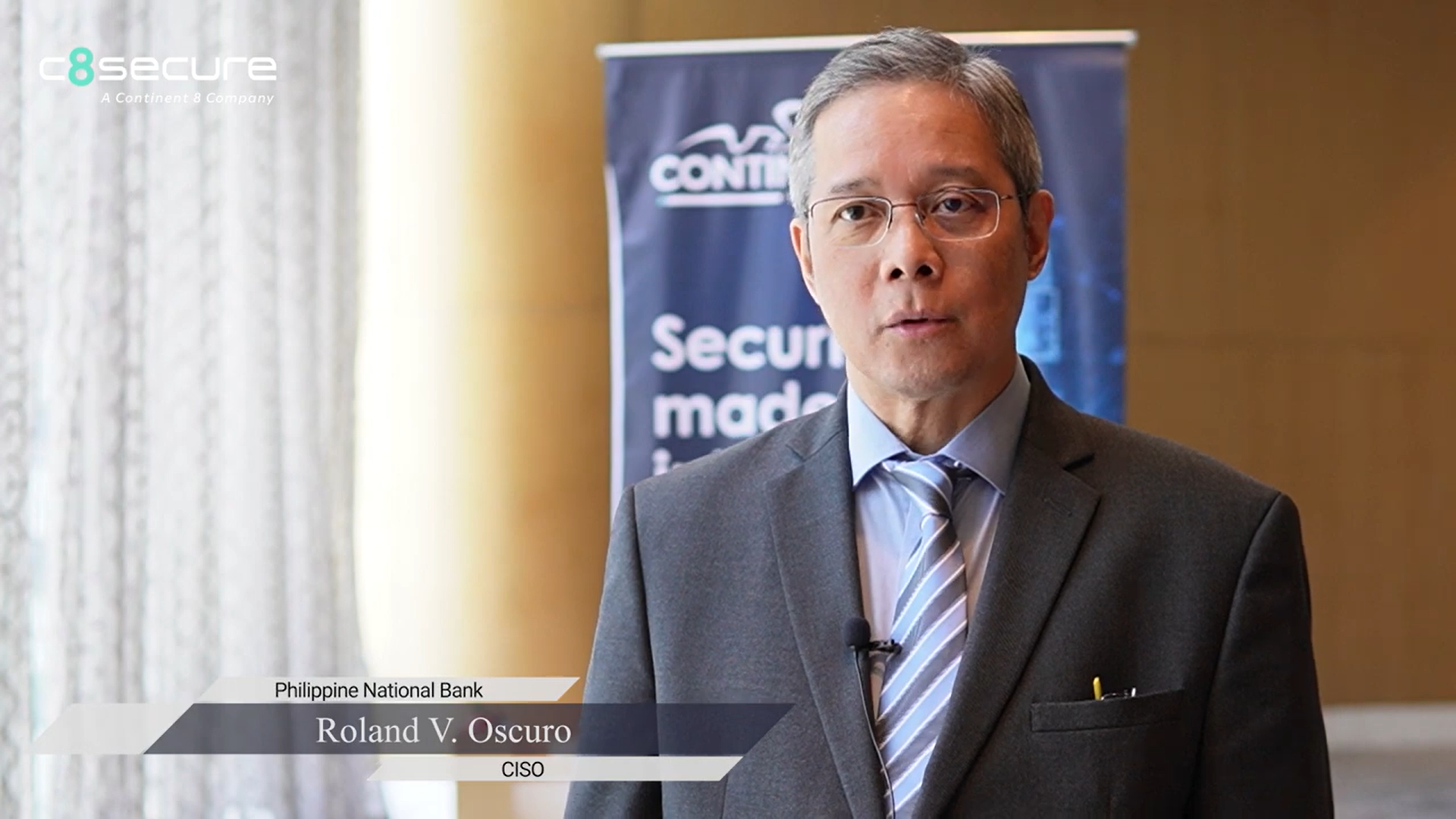
Philippine National Bank – Customer Spotlight

Hear from Roland Oscuro, FSVP, CISO, Philippine National Bank, who discusses his company’s partnership with C8 Secure, providing SOC services to the company.

Play Video

C8 Secure - Philippine National Bank - Customer Spotlight

EVENT

C8 Secure CIO Philippines Summit 2024

Our C8 Secure team hosted a Cybersecurity Summit gathering the brightest minds, industry leaders, and executives from top organizations.

Play Video

C8 Secure CIO Philippines Summit 2024

Let’s Get Started


The Philippines’ cybersecurity issue: More than 5 billion cyber attacks daily, report says

By Featured

BLOG

The Philippines’ cybersecurity issue: More than 5 billion cyber attacks daily, report says

The Philippines saw a sharp increase in cyber attacks in the first quarter of 2024, with the number of attacks reaching a staggering five billion per day . This is a significant 28 percent increase from the previous quarter’s 3.9 billion.

In this blog, we will explore some of the most popular types of cyber attacks in the Philippines in 2024, recent high-profile cases and the necessary measures that the government and organizations must adopt to ensure they remain resilient against evolving cyber threats.

Cybersecurity threat #1: DDoS attacks

Cybercrime in the Philippines takes various forms, employing different methods depending on the objectives, whether obtaining bank information, personal data or other sensitive information.

Among them are Distributed Denial-of-Service (DDoS) attacks, which aim to disrupt online services by overloading their traffic.

An infamous group known as Exodus Security has been responsible for carrying out DDoS attacks on Philippine government websites. The group has been involved in leaking stolen data from its targets in the Philippines, as well as other countries such as the United Kingdom, France, Indonesia, and India.

Recently, there have been cyber attacks in the Philippines by a local group called DeathNote Hackers. They are said to have leaked data from the Bureau of Customs, with the stolen data amounting to 4.5 gigabytes and containing personal information of over 2,200 employees and approximately 80,000 customers.

Cybersecurity threat #2: Malware attacks

Malware presents a high-risk cyber attack threat. Malware, short for malicious software, is any app or software designed to disrupt device or computing operations, steal sensitive data or gain access to system resources. It can take different forms, including computer viruses, ransomware, spyware, Trojan horses and worms.

In February, hackers used malware to access and control the Philippine Coast Guard’s (PCG) Facebook page, posting two malicious videos. This was the third time the PCG has been targeted by hackers this year. In mid-February, the PCG’s X (formerly Twitter) account was hijacked for several hours. The month before, the PCG’s website was one of several Philippine government sites attacked by hackers with IP addresses in China.

The Philippine National Police (PNP) also recently experienced several system breaches. The hackers gained access to the PNP’s Logistics Data Information Management System, which is the official repository for data on police equipment and physical assets. They also breached the online permits application platform of the PNP-Firearms and Explosives Office. The PNP is working with the Department of Information and Communications Technology (DICT) to investigate potential malware activity and malicious accounts created for the cyberattacks.

Then again in July, the DICT itself was compromised by a threat actor known as ph1ns. This hacker group, notorious for reigning havoc and causing disruption across various government systems in the Philippines, infiltrated the DICT’s Disaster Risk Reduction Management Division and disclosed screenshots and detailed system descriptions on a dark web forum.

A message posted on the DICT-DRRMD website revealed ph1ns’s motivations from a hacktivist position, stating, “This attack is not merely to ridicule DICT’s reputation but also to fortify the nation’s cyber defense by embarrassing them.”

5 measures for mitigating cyber risk

The Philippines will continue to be a target for cyber attacks. To mitigate against these ongoing threats, local government agencies and organizations must adopt a proactive and layered defence strategy.

Here are some of the best measures they should consider:

  • Regular security audits and assessments

  • Advanced threat detection and response using latest technologies

  • Robust incident response and mitigation plans

  • Comprehensive training and awareness programs

  • Legislative and regulatory compliance

    • Ensure compliance with relevant cybersecurity regulations and standards, and not simply performing Checkbox Security.
    • Stay abreast of legal requirements and industry standards.

Cybersecurity solutions for a safer tomorrow

With cyber threat incidents on the rise, C8 Secure is committed to working closely with corporations and governmental agencies to provide practical, adaptable, preventable and problem-solving security solutions.

Learn how our expertise can help your organization stay ahead of cyber threats – contact us today!

DOWNLOAD BROCHURE

For more information, please download our solutions brochure

Related content: C8 Secure in the Philippines 

TESTIMONIAL

Philippine National Bank – Customer Spotlight

Hear from Roland Oscuro, FSVP, CISO, Philippine National Bank, who discusses his company’s partnership with C8 Secure, providing SOC services to the company.

Play Video

C8 Secure - Philippine National Bank - Customer Spotlight

EVENT

C8 Secure CIO Philippines Summit 2024

Our C8 Secure team hosted a Cybersecurity Summit gathering the brightest minds, industry leaders, and executives from top organizations.

Play Video

C8 Secure CIO Philippines Summit 2024

Let’s Get Started


Key takeaways from Infosecurity Europe 2024

By Featured

BLOG

Key takeaways from Infosecurity Europe 2024

Leon Allen, Director of Cybersecurity at C8 Secure, alongside several of his colleagues in the global Continent 8 and C8 Secure cybersecurity team, recently attended Infosecurity Europe 2024. Infosecurity Europe is the UK’s premier cybersecurity event, bringing together senior leaders of the cybersecurity community to pool their expertise and tackle the pressing challenges they face daily in the information security sector.

Here, Leon shares his key takeaways from the event.

Tell us about your impressions of Infosecurity Europe 2024? What did you enjoy most about the show?

Infosecurity Europe always offers valuable learning opportunities. These come in the form of conference sessions and networking discussions with cybersecurity experts and professionals, allowing for the exchange of ideas and sharing of lessons learned from diverse practices, backgrounds and applications.

In addition, a small but appreciated observation is Infosecurity Europe’s new floor plan layout. The distinct startup, technology and networking zones made it easier to navigate the exhibition for an improved attendee experience.

While at Infosecurity Europe 2024, did you see a common themes at the event?

The event covered a wide range of relevant themes and topics that were of interest to the cybersecurity community. These ranged from AI (overload; of course!) to securing the supply chain to ransomware. Organizational-specific topics also included encouraging diversity in cybersecurity and creating a security-focused culture.

Were there any topics or specific conference sessions that were of interest to you?

I always look forward to Infosecurity Europe’s agenda as it never disappoints. I try to attend as many conference sessions as I can over the three-day period – I thoroughly enjoy all of them!

While it’s too lengthy to detail all sessions details, here are some of the highlights, notes and key takeaways from two of the ransomware and AI presentations that I attended:

Session 1: Ransomware: Time to Decide – Will You or Won’t You Pay?

  • 1 billion paid in ransom in 2023!
  • Skill shortage across cybersecurity remains (and is getting worse)
  • There is no legislation in the UK mandating reporting of cyber ransoms
  • Figuring out who’s on the other end of the table is important (e.g. do they have the decryption key or are you a victim of a ransom of a service with no real technical expertise?)
  • Advice:
    • Three Ps
      • Prepare: This will happen.
      • Plan: Understand who are the stakeholders.
      • Practice: Can you use your insurance provider or managed
        security provider to perform a tabletop exercise?

Session 2: How to Win the AI Arms Race

  • Projection that cybercrime will be worth 10.5 trillion dollars in 2025! (To put it in perspective, that would make it the third richest country in the world in terms of GDP)
  • Threats:
    • Generative AI (targeted emails; improving virus’)
    • AI constructive programs
    • AI Red Teaming
    • Polymorphic attacks (e.g. Black Mamba – where a virus morphs over time)
  • How can AI help defence in depth?
    • 92% of malware uses DNS and traditional tools only look at basic DNS
      • E.g. Suburst Solarwinds Compromise
      • AI could help us identify nefarious domains to expediate efforts in blocking these compromises
    • 91% of attacks involve email
      • Using AI to scan emails to look for abnormalities
    • AI-powered end-point protection
      • AI-powered XDR; including deep learning
    • Deep Learning AI is closing the gap
    • Updates and patch management
      • AI patch management vendors are coming to market
    • Training and awareness
      • Culture AI – scanning the network and recommend targeted training
    • Incident response planning
      • Micro segmentation
  •  Summary:
    • Know your enemy
    • AI is only part of the solution
    • Create a multi-layered defence

I’ve already marked my calendar for Infosecurity Europe 2025. Hope to see you there!

With cyber threat incidents on the rise, C8 Secure is committed to working closely with corporations and governmental agencies to provide practical, adaptable, preventable and problem-solving security solutions.

Learn how our expertise can help your organization stay ahead of cyber threats – contact us today!

DOWNLOAD BROCHURE

For more information, please download our solutions brochure

Let’s Get Started


Key takeaways from the 2024 Report on the Cybersecurity Posture of the United States

By Featured

BLOG

Key takeaways from the 2024 Report on the Cybersecurity Posture of the United States

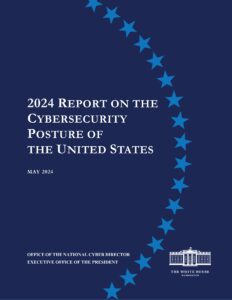
The Office of the National Cyber Director’s (ONCD) 2024 Report on the Cybersecurity Posture of the United States highlights significant trends and areas of concern in the evolving cyber threat landscape. Notably, it underscores the growing risks to critical infrastructure, the persistent threat of ransomware, the exploitation of supply chains, the proliferation of commercial spyware and the dual-edged impact of artificial intelligence.
Brian Borysewich, Chief Information Security Officer (CISO) at C8 Secure, provides his insights on the report, emphasizing the importance of enhanced public-private collaboration, robust incident response plans, advanced threat detection technologies and comprehensive training programs. By adopting these measures, organizations can build a resilient cybersecurity framework to defend against ever changing and increasingly sophisticated persistent cyber attacks.

Q&A with Brian Borysewich

What were your initial impressions after reading the 2024 Report on the Cybersecurity Posture of the United States?

The report identifies several areas needing significant improvement. These include the need for enhanced collaboration between public and private sectors, improved cyber hygiene practices across all industries, and the development of more robust incident response plans. Additionally, there is a call for greater investment in cybersecurity research and development to keep pace with the evolving threat landscape.

Was there anything in the report that surprised you or confirmed what you are already seeing in the industry?

The emphasis on commercial spyware was particularly striking. While we’ve been aware of its existence, the report’s detailed analysis confirms its rapid growth and the significant

threat it poses. The extent to which these tools are being developed and sold by private vendors to nation-state actors was eye-opening. This aligns with what we are already seeing in the industry, where the lines between nation-state and criminal activities are increasingly blurred. The sophistication and availability of these surveillance tools are growing at an alarming rate, making it easier for malicious actors to carry out highly targeted and invasive attacks.

Another point of confirmation was the continued threat posed by ransomware. The report’s findings on ransomware mirror what we’ve been observing: ransomware groups are becoming more organized and their tactics more advanced. They are continually finding new ways to evade detection and disrupt operations, which reinforces the need for constant vigilance and adaptive security measures within organizations.

Overall, the report validates many of the trends and threats that cybersecurity professionals have been monitoring, but it also highlights emerging areas that require immediate attention and action.

How do the findings of this report compare to some of your other governmental agency experiences?

The findings of the 2024 report are notably more detailed and forward-looking compared to other governmental agency reports I’ve encountered. One significant difference is the comprehensive integration of emerging technologies, such as artificial intelligence, into the broader discussion on cybersecurity. Many previous reports have touched on traditional cybersecurity threats and responses but have not delved as deeply into how rapidly advancing technologies are reshaping the threat landscape.

Additionally, this report places a strong emphasis on the interconnection of cyber threats and the broader geopolitical environment. It recognizes that cyber risks are not isolated incidents but are often part of larger strategic moves by nation-state adversaries. This holistic view aligns well with the realities we see in the industry, where cyber threats are increasingly used as tools of political and economic influence.

Another standout aspect is the report’s focus on the commercial spyware market and its implications. This is a relatively new area of concern that hasn’t been covered in as much depth by other reports. The acknowledgment of commercial entities contributing to the cyber threat landscape by selling advanced surveillance tools to nation-state actors is a critical insight that requires immediate attention and regulatory action.

Furthermore, the report’s recommendations for enhancing collaboration between the public and private sectors, as well as investing in cybersecurity research and development, reflect a progressive approach that is essential for addressing modern cyber threats. In my experience with other governmental reports, there is often a lag in recognizing the need for such proactive measures.

Overall, the 2024 report provides a more nuanced and forward-thinking perspective that is crucial for developing effective cybersecurity strategies in today’s rapidly evolving digital world.

What are the best measures government agencies or organizations should take in the face of ever-growing cyber attacks?

Government agencies and organizations must adopt a proactive and layered defense strategy to effectively combat the ever-growing threat of cyber attacks. Here are some of the best measures they should consider.

  • Enhanced collaboration
    • Foster stronger collaboration between public and private sectors.
    • Share threat intelligence, best practices and resources.
    • Establish partnerships and communication channels.
  • Regular security audits and assessments
    • Conduct regular security audits and assessments.
    • Perform internal and external evaluations.
    • Update vulnerability assessment and penetration testing (VAPT) regularly.
  • Advanced threat detection and response using latest technologies
    • Invest in AI-driven analytics, machine learning and behavioral analysis tools.
    • Implement Security Information and Event Management (SIEM) systems.
  • Robust incident response and mitigation plans
    • Develop and maintain clear procedures for detecting, responding to, and recovering from cyber incidents.
    • Regularly test and update these plans through simulations and drills.
  • Comprehensive training and awareness programs
    • Provide ongoing cybersecurity training and awareness programs for all employees.
    • Educate staff on recognizing phishing attempts, social engineering tactics and other common attack vectors.
  • Cyber hygiene practices – protecting the environment
    • Implement and enforce strong cyber hygiene practices.
    • Ensure regular software updates, patch management and the use of multi-factor authentication (MFA).
  • Supply chain security
    • Strengthen supply chain security by assessing and monitoring third-party vendors and partners.
    • Establish strict security requirements and conduct regular assessments.
  • Investment in research and development
    • Allocate resources to cybersecurity research and development.
    • Invest in innovative technologies and methodologies to stay ahead of emerging threats particularly around advancements in AI and artificial general intelligence (AGI).
  • Legislative and regulatory compliance
    • Ensure compliance with relevant cybersecurity regulations and standards, and not simply performing Checkbox Security.
    • Stay abreast of legal requirements and industry standards.
  • Public awareness campaigns using all mediums
    • Engage in public awareness campaigns to educate citizens about cybersecurity risks and best practices.
    • Increase public knowledge and vigilance to create a more secure digital environment.

With cyber threat incidents on the rise, C8 Secure is committed to working closely with corporations and governmental agencies to provide practical, adaptable, preventable and problem-solving security solutions.

Learn how our expertise can help your organization stay ahead of cyber threats – contact us today!


DOWNLOAD BROCHURE

For more information, please download our solutions brochure

Let’s Get Started